

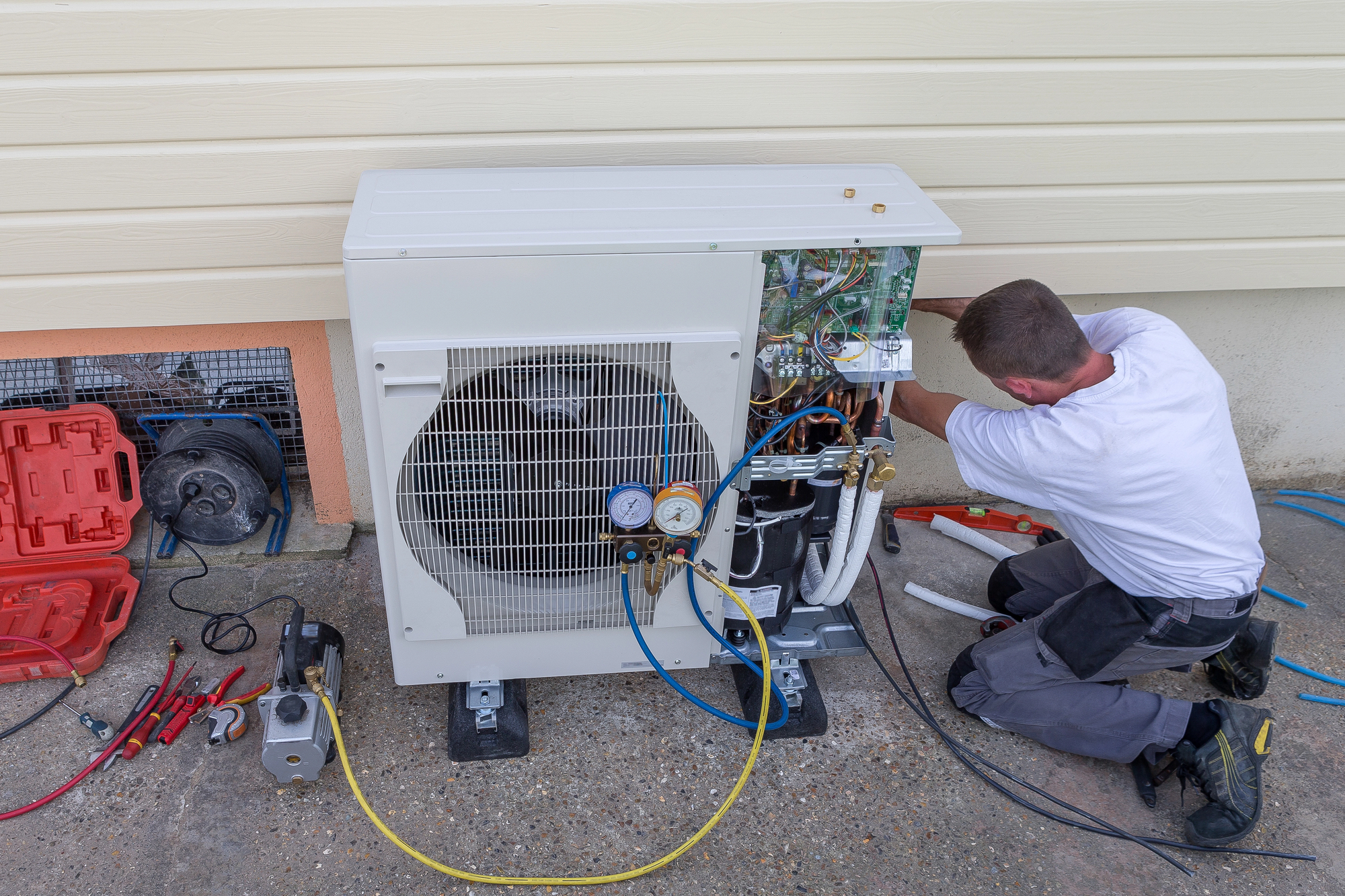
A heat pump doesn't work like a light switch, cranking out heat at full blast the moment it turns on. It's closer to a thermostat-controlled engine that's meant to run in long, steady cycles, drawing heat from the outside air and moving it indoors at a measured pace.
Capacity determines how much heat the engine can move per hour, and matching that number to a home's actual heat loss is the entire science behind sizing. Get it wrong in either direction, and the system fights its own design.
That's the piece of heat pump installation in Gresham, OR, that often gets the least attention, even though it affects comfort and efficiency more than almost any other decision in the process.

What "Sizing" Actually Means for a Heat Pump
Sizing isn't a guess based on square footage alone. HVAC professionals use a Manual J load calculation to determine exactly how much heating and cooling capacity a home needs. That calculation factors in details like:
- Insulation levels
- Window count and orientation
- Ceiling height
- Air leakage
- The local climate
Two homes of the same size can need very different equipment depending on these details, which is why a one-size-fits-all approach rarely works.
The Problem with an Oversized Heat Pump
Short Cycling and Wear
An oversized unit satisfies the thermostat too quickly, then shuts off, only to kick back on again a few minutes later. This pattern, known as short cycling, places extra strain on the compressor and other components each time the system starts and stops, which can shorten their lifespans.
Poor Humidity Control
Because an oversized system runs in short bursts, it doesn't stay on long enough to properly remove humidity from the air. This kind of short cycling wastes energy and compromises comfort, leaving homes feeling clammy even when the thermostat reads "comfortable."
The Problem with an Undersized Heat Pump
An undersized system has the opposite issue. It runs almost constantly during Oregon's colder stretches, struggling to keep up and leaning heavily on backup heat.
Common signs of an undersized heat pump include:
- The home never quite reaches the temperature set on the thermostat
- Backup or auxiliary heat runs far more often than expected
- Utility bills climb even though the system rarely shuts off
Why Professional Sizing Beats Guesswork
Rule-of-thumb sizing, such as estimating capacity purely by square footage, overlooks the details that actually determine how a home gains or loses heat. A proper load calculation accounts for those variables directly.
This matters even more in the Portland metro area, where homes range from older, drafty construction to newer, tightly built houses, often on the same street. A system sized for one won't necessarily work for the other.
Professionals walk you through a full evaluation of the home before recommending equipment for heat pump installation services, not just a quick square-footage estimate. If you're not sure whether your current system is the right size, it's worth having a technician take a look.

Heat Pump Installation in Gresham, OR, Done Right
A heat pump that's properly sized will run more quietly, last longer, and keep a home more comfortable through every season than one that's simply larger.
At A-TEMP, we calculate your home's load rather than guessing, so you get equipment that actually fits. Reach out to our team to schedule a consultation and get a sizing recommendation built around your home, not a generic estimate.
5 Star Rated
Quality Service That Will Make You Smile
.webp)
A-TEMP Heating, Cooling & Electrical came recommended from a friend who is a current inspector. I've used them for years for furnace and AC maintenance. Their customer service is excellent—helpful, friendly, and persistent in scheduling my maintenance. I appreciate that they've never pushed to replace my old furnace but instead helped me decide when to repair or replace without being pushy about sales. Finding trustworthy repair folks is hard, and I highly recommend them. You won't be disappointed.
A-TEMP Heating, Cooling & Electrical goes above and beyond to take care of their customers. I've been a customer for years and am impressed with the technicians and office staff. The fact that this is a family business is also a plus. Thank you.
A-TEMP Heating, Cooling & Electrical did a wonderful job. They were on time, wore shoe coverings, and worked diligently. They replaced our air filter and an electrical part under warranty, explaining everything clearly. The work was clean and professional, and the team was congenial and pleasant.
Everyone we’ve dealt with has been polite, positive, and very courteous. A-TEMP Heating, Cooling & Electrical quickly replaced our furnace during the coldest part of a snowy winter. Other companies couldn’t get out for 1-2 weeks, but A-TEMP assessed it the same day and replaced it in 2 days. Can’t say enough great things about this company!
.svg)


Serving All Members of Your Family
Family is built into our company name. For over 50 years, our family-owned & operated HVAC business has taken care of our neighbors. We focus on care for our team so they can focus on care for our customers.
